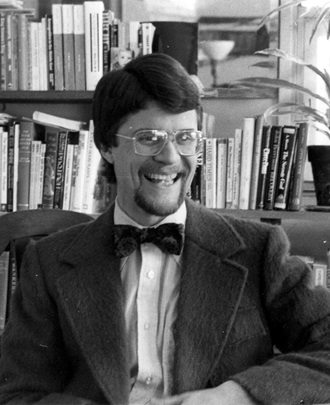
David Eisenman, former Assistant Dean of Students, discusses the 1960s at the University of Illinois. Topics include protests during Project 500, UI centennial programming and discontent from faculty and students, blood banks, the cost of higher education, and the overall campus social and educational culture. This collection also contains audio recorded in 1968 by Eisenman concerning the Project 500 program and student occupation of the Illini Union held on September 10, 1968.
In the first of six interviews, Eisenman provides details of his educational experiences at Harvard and the University of Illinois, including his work reporting on the Illini Union protest on September 10, 1968. He also describes his work during the UI centennial and the creation of scholarship funds for students who could not otherwise afford the fees required to attend UIUC.
In part two of his interview, Eisenman focuses on his time working in Governor Ogilvie's administration to lower the cost of higher education by allowing the cost of tuition to rise, but providing more scholarships for low-income students. Additionally, he discusses the Illinois Blood Labeling Act, the creation of a large-scale blood drive at the University of Illinois, and local politics regarding the Champaign County Blood Bank.
Eisenman discusses the differences in campus culture between the University of Illinois and Harvard. He also describes the academic environment at UIUC, with a particular focus on faculty in the sciences.
Eisenman discusses the discontent certain faculty members and students felt during the centennial year regarding the quality of education at the University of Illinois. Of major concern was the length of time it took for new courses to be approved, which Eisenman found discouraging during the Vietnam era, a period of rapid change.
Eisenman discusses the interdisciplinary work that occurred at the University of Illinois in the 1960s. He highlights the use of computers in fine and applied arts, which was uncommon at the time. Finally, he talks about electronic and classical music, composer John Cage, and Cage's work at the university.
Eisenman expands on electronic music and John Cage's compositions, which were introduced in David Eisenman (Part 5). Eisenman touches on Cage's composition methods, the performance of HPSCHD in Assembly Hall, and a class on electronic music taught by chemistry professor Lejaren "Jerry" Hiller.
Audio recorded by David Eisenman, Assistant Dean of Students from 1968 to 1970, during the years of Project 500. It includes his assessments of the implementation of Project 500 as well as the resulting conflicts, and touches on his first-hand accounts of the protests by African American students against their placement in sub-standard housing in the first weeks of the program.