Vic Lukas, co-founder of the University of Illinois Campus Folksong Club, reads an essay about a controversial performance hosted by the club. Robert Johnson, a Black shoe shiner and carnival entertainer, was invited to play at the university. After his musical performance, the host asked him to tell about his carnival experience, which offended high-ranking university officials. Lukas considers how racism affected the reaction to Johnson’s performance.
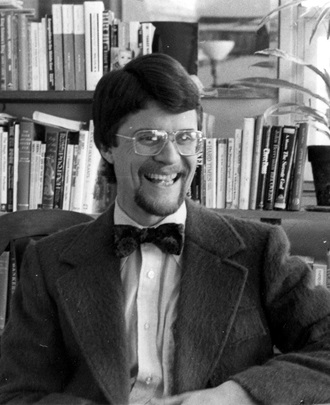
This detailed interview with Archie Green, the faculty sponsor of the Folksong Club, begins by documenting Green’s upbringing in an immigrant enclave of California and his burgeoning class-consciousness. Although he would have preferred to work as a laborer in California, he was encouraged to become an intellectual at the University of Illinois. During his tenure as a librarian for the Institute of Industrial Relations, he helped the Folksong Club bring folk artists and folklorists to campus. A large focus of the interview is the intersection of politics and folk music. Green also discusses his relationships with various folk artists.
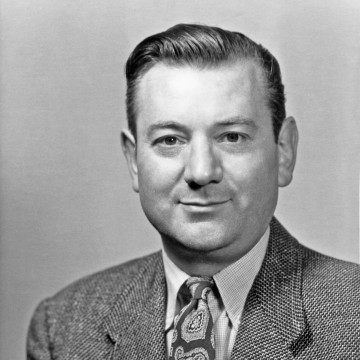
In the first of six interviews, Eisenman provides details of his educational experiences at Harvard and the University of Illinois, including his work reporting on the Illini Union protest on September 10, 1968. He also describes his work during the UI centennial and the creation of scholarship funds for students who could not otherwise afford the fees required to attend UIUC.
Eisenman discusses the discontent certain faculty members and students felt during the centennial year regarding the quality of education at the University of Illinois. Of major concern was the length of time it took for new courses to be approved, which Eisenman found discouraging during the Vietnam era, a period of rapid change.
Howie Schein took a circuitous path to the University of Illinois, first studying at Grinnell College, then the University of California, Berkeley, and then arriving in Champaign to pursue his PhD. After graduation, he led Unit One as associate director and director from 1976 to 2008. In this interview, he discusses his early life and education, graduate studies, and how he guided Unit One as it evolved through the decades.
Jeff Machota attended the U of I from 1984 to 1986 and took full advantage of what Unit One/Allen Hall had to offer. He made connections with artists-in-residence and also got involved in the anti-apartheid movement. In this interview, he discusses his early life, activism, and his impressions of the University.
To access this interview, please contact the Student Life and Culture Archives at illiarch@illinois.edu
Chicago native Laura Haber spent more than 40 years in Champaign-Urbana. She first arrived as a political science undergraduate in 1985, continued through graduate school, and later worked with the Unit One program at Allen Hall for more than two decades. Known on the University of Illinois Urbana-Champaign campus as a “queer dorm” and important hub for the campus queer culture, Allen Hall has long supported LGBTQ students and progressive activism through its distinctive living learning community, Unit One. This oral history interview explores how queer culture and student activism became intertwined in the development of Allen Hall’s unique community. Haber reflects on her student life in the 1980s, her role in building programs such as the Guest-in-Residence initiative, the expansion of all-gender housing, and her memories of working with students over many years.
To access this interview, please contact the Student Life and Culture Archives at illiarch@illinois.edu
Stephanie Skora, founder of the Campus Union for Trans Equality and Support (CUTES) discusses her experience coming out as trans during her freshman year at UIUC and the feeling of isolation she encountered due to the complete lack of spaces for trans and gender-nonconforming people on campus at that time. She emphasizes how this disorientation she experienced led her to found CUTES as a safe space for trans people to meet each other and build community. Alongside her work with CUTES, Stephanie was highly engaged in progressive student activist movements, such as Black Lives Matter, Palestinian Solidarity, and demands for Indigenous rights. Today, Stephanie lives in Chicago and works in civic education centered around voting rights, anti-racism, anti-Zionism, and trans advocacy.