David and Ann Atkins attended the University of Illinois where both earned teaching degrees in the early 1990s. In this interview, they discuss why they chose the University of Illinois, campus life, notable professors, and meeting while living at Stratford and Koinonia houses.
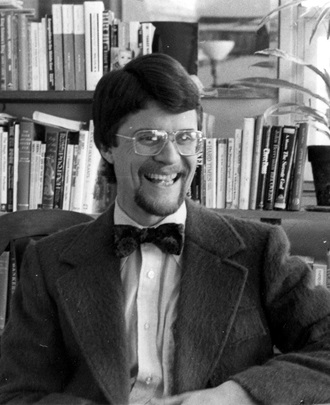
Eisenman discusses the differences in campus culture between the University of Illinois and Harvard. He also describes the academic environment at UIUC, with a particular focus on faculty in the sciences.
Eisenman discusses the discontent certain faculty members and students felt during the centennial year regarding the quality of education at the University of Illinois. Of major concern was the length of time it took for new courses to be approved, which Eisenman found discouraging during the Vietnam era, a period of rapid change.
Joseph T. Tykociner was a professor of Electrical Engineering at the University of Illinois from 1921 to 1949 and a professor emeritus from 1949 to 1969. In this interview, conducted on March 9, 1967, Tykociner discusses his early interest in sound recording and sound in moving pictures, experience as a student/research engineer/faculty at the University, research and experiments with sound recording, career as a research engineer for Marconi/German companies on radio telegraphy/radio communications at Russian companies/Army, his return to the US in 1920, his later demonstration of sound in film, and commercials and films using his sound system.
Roger Adams was a professor of Chemistry at the University of Illinois from 1916 to 1957. In these interviews, conducted by John B. Mellecker over the course of several months from 1964 to 1965, Adams discusses his childhood, studies at Harvard, his time working in Berlin, his work during WWI and WWII including his collaboration with Sir Robert Robinson, his observations of Japan following WWII, awards and medals won over the course of his career, his time as a professor at Harvard, Radcliffe, and the University of Illinois, his work with students and his outlook on the role of a mentor and educator, the costs of research, and the impact of new technologies on the research process.
Roger Adams was a professor of Chemistry at the University of Illinois from 1916 to 1957. In these interviews, conducted by John B. Mellecker over the course of several months from 1964 to 1965, Adams discusses his childhood, studies at Harvard, his time working in Berlin, his work during WWI and WWII including his collaboration with Sir Robert Robinson, his observations of Japan following WWII, awards and medals won over the course of his career, his time as a professor at Harvard, Radcliffe, and the University of Illinois, his work with students and his outlook on the role of a mentor and educator, the costs of research, and the impact of new technologies on the research process.
Victor E. Shelford was a professor of Zoology at the University of Illinois from 1914 to 1946. In this interview, conducted by Maynard Brichford on March 24, 1965, Shelford discusses his work at West Virginia, Chicago, and Illinois, the Ecological Society of America, fellow scientists who have influenced/assisted with research/published with him, field trips, Brownfield Woods, Laboratory and Filed Ecology (1929), and The Ecology of North America.
William Rose was a professor of chemistry at the University of Illinois from 1922 to 1955. He speaks about his youth, amino acid research, work on pepsin and creatine, krebiozen, World Wars I and II, research support, students, presidents, and textbooks.