
Complicated Images
Scholars, notably historian James L. Hevia and art historian Stephanie H. Tung, have convincingly demonstrated how the Boxer Rebellion prompted greater Western interest in visual imagery depicting supposed Chinese brutality. These visual narratives served explicitly propagandistic purposes, providing justification for the punitive military actions taken against both the Boxers and the broader Chinese population.1 Tung further establishes that many of these photographs were intentionally staged or removed from their original contexts to enhance their propagandistic impact.2
Two striking examples of such deliberate misrepresentations appear on the Two and Three of Hearts cards. The Two of Hearts (Figure 1) shows five prisoners kneeling before the camera, guarded by Chinese soldiers. The booklet misleadingly identifies this image as a “Scene Before Execution of Fifteen Boxers,” and claims that after the rebellion, Boxer prisoners were executed on imperial orders to placate foreign powers.3 Correspondingly, the Three of Hearts shows the grisly aftermath, depicting decapitated bodies on the ground with foreign onlookers posing prominently for the camera. According to the booklet, this photograph represented the “Scene after Execution of Fifteen Boxers,” further asserting the bodies were intentionally displayed as a deterrent.4 Despite these detailed descriptions, neither image is genuinely related to the Boxer Rebellion. Tung’s research has clarified that both photographs actually document an unrelated event—the execution of nineteen pirates in Kowloon (part of the British colony of Hong Kong at the time) in April 1891. These men had been captured following the 1890 hijacking of the coastal steamer SS Namoa (Figure 2–3), operating between Hong Kong and Shantou.5 Such discrepancies between the photographs and their textual descriptions call into question the overall accuracy and reliability of information presented by this deck.
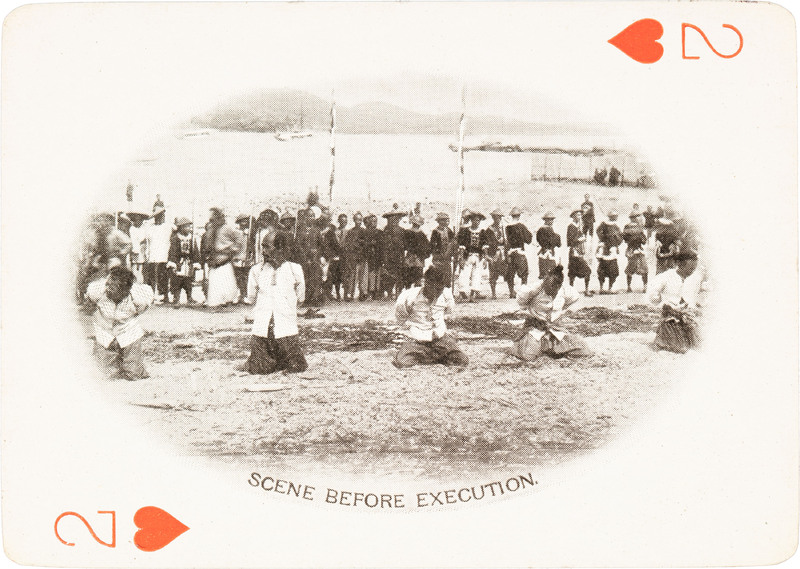
Figure 1
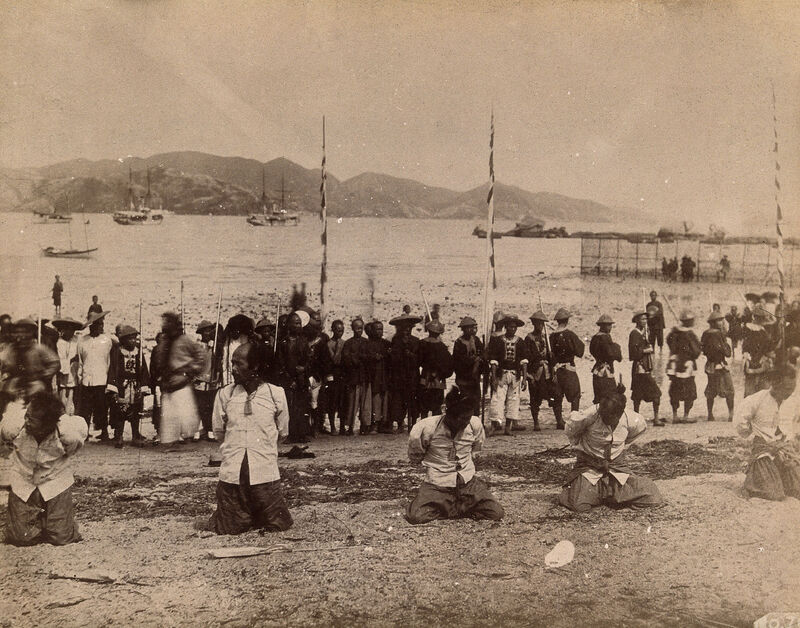
Figure 2: Wellcome Collection Reference: 663758i
Figure 3: Wellcome Collection Reference: 663456i
Other discrepancies between the photographic images and their corresponding textual descriptions extend even beyond the ten-year gap shown in the Kowloon executions. For instance, the photograph used for the Four of Hearts card (Figure 4) was taken significantly earlier. This photograph, originally captured by British photographer William Saunders (1832–1892) in the 1870s (Figure 5), portrays a public execution scene intended to highlight supposed brutality inherent in Chinese culture.6 It features a kneeling man awaiting execution, his queue held upward by one executioner while another raises a sword, with spectators surrounding the scene. The photographic technology available in the 1870s required prolonged exposure times ranging from several seconds up to a minute. During exposure, any slight movement from subjects would cause noticeable blurring in the image, particularly around the outlines of the human figures. However, this photograph shows clear contours of the individuals depicted, strongly indicating that subjects remained still during exposure. Such stillness would only be possible if the scene were deliberately posed and staged for the camera rather than authentically capturing a spontaneous moment. Nevertheless, decades later, the playing card deck misleadingly repurposed this staged photograph, associating it inaccurately with the Boxer Rebellion, further reinforcing distorted stereotypes of Chinese cruelty.
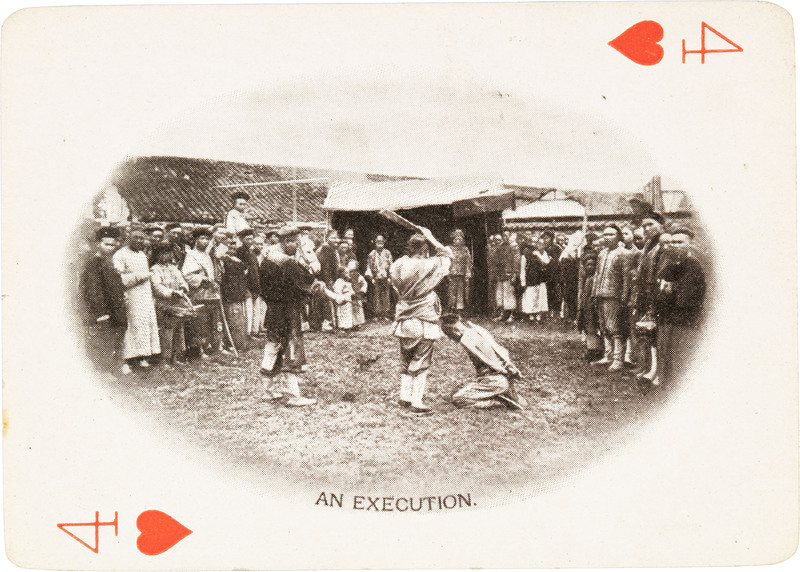
Figure 4
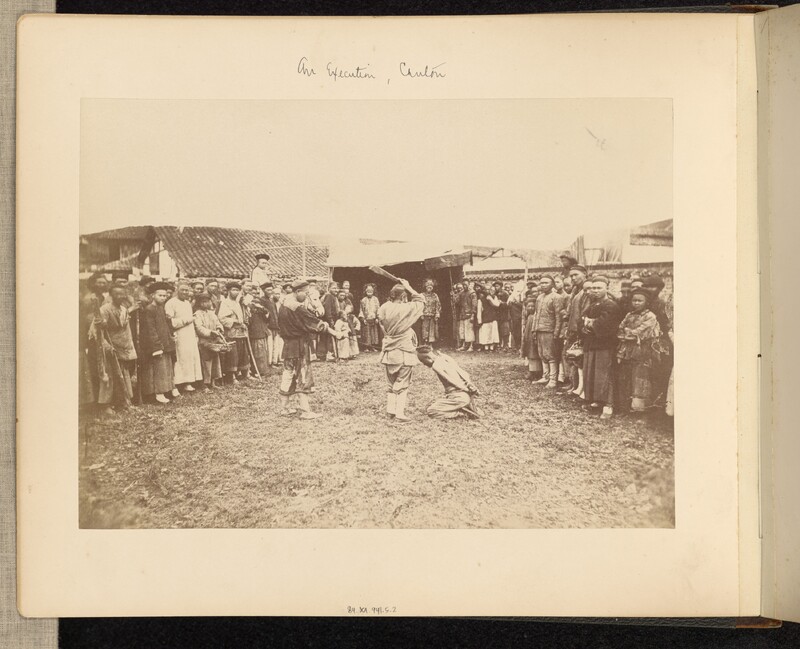
Figure 5: Getty Museum Collection 84.XA.941.5.2
Theatrical staging is also visible in other photographs from the deck, notably the Six of Hearts (Figure 6), which supposedly shows a Chinese courtroom scene featuring a judge seated prominently at the center. Art historian Tingting Xu explains that photographic representations of Chinese courtrooms from this period often followed visual patterns first established in export paintings specifically produced for Western audiences. Xu further observes that, to reinforce the image’s supposed authenticity, the judge and his attendants hold official-looking court documents. However, the authenticity of the image is questionable, particularly due to the accused person’s posture: instead of kneeling, which would have been the respectful and customary gesture in actual court settings, the figure squats casually. Additionally, the exaggeratedly tall hats worn by the standing attendants lend an overtly theatrical quality to the composition. The artificiality is further confirmed by the direct gaze of two attendants toward the camera.7 Complementing such fabricated visual depictions, however, the booklet’s textual commentary further criticizes the Chinese legal system, asserting: “The courts in China are much simpler than in the Western countries. There are no counsel on either side, and the amount of justice dealt out is generally measured by the amount of money the defendant can raise.”8
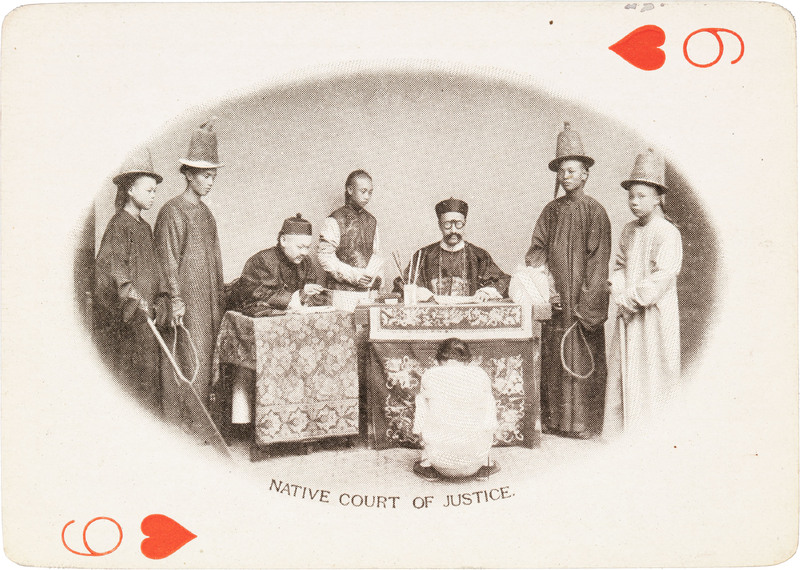
Figure 6
In addition to judicial stereotypes, the deck also perpetuates broader prejudices related to daily life and social behavior. The stereotypical portrayal of widespread opium addiction among the Chinese features prominently, notably illustrated by the Seven of Hearts (Figure 7). The accompanying booklet describes opium use as “indispensable” for Chinese people, presenting them as inherently weak-willed and indulgent.9 Historian Hans Derks has pointed out the irony underlying Western attitudes toward China and opium consumption, which drastically shifted during the nineteenth century. Initially, Western powers criticized China for being isolationist, particularly because of its resistance to foreign trade and its opposition to the massive amounts of opium being smuggled into the country. The East India Company played a central role in this trade, smuggling opium into China as a way to counter a severe trade imbalance created by Britain’s heavy demand for Chinese goods such as tea.10 When Chinese authorities attempted to suppress this trade, Britain condemned their actions as harmful to international commerce and used that claim to justify two military conflicts later known as the Opium Wars. The First Opium War (1839–1842) was fought between Britain and China, while the Second Opium War (1856–1860) brought both Britain and France into conflict with China. Although these wars were driven by China’s efforts to halt the opium smuggling, Britain portrayed them as defensive measures necessary to protect its citizens and safeguard future trading rights. Both wars ended with China’s defeat, forcing it to permit continued opium imports from foreign powers, including but not limited to Britain and France. Yet, following China’s forced acceptance, Western representations dramatically changed. By the late nineteenth century, Western literature and media no longer portrayed China as isolationist; instead, they depicted Chinese society as inherently dependent on opium, morally corrupt, and emblematic of social decay, starkly contrasted with Western ideals of morality and virtue.11 In other words, ironically, China was initially condemned for rejecting the opium trade; later, China was stigmatized for the consequences of opium consumption, which had itself been forcibly introduced and perpetuated by Western powers.
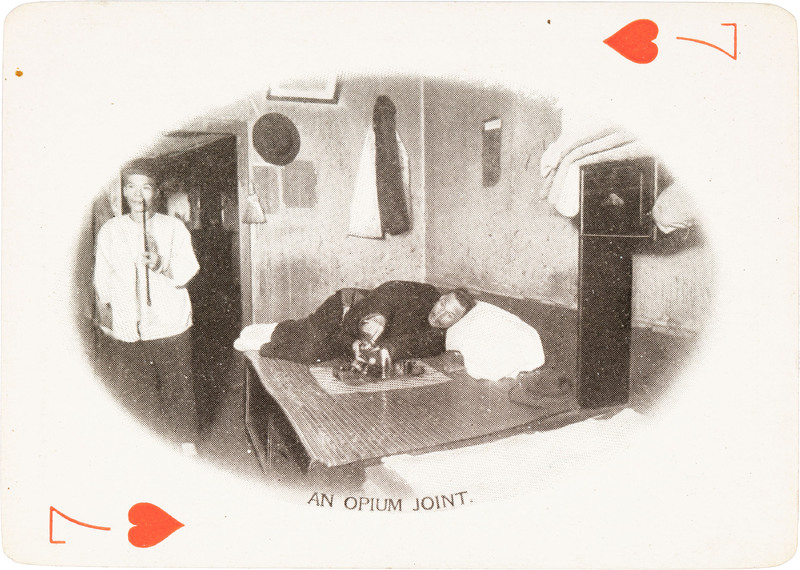
Figure 7
Citation
1. James L. Hevia, “The Photography Complex: Exposing Boxer-Era China (1900–1901), Making Civilization,” in Photographies East: The Camera and Its Histories in East and Southeast Asia, edited by Rosalind C. Morris (Duke University Press, 2009), 79–119; James L. Hevia, English Lessons: The Pedagogy of Imperialism in Nineteenth-Century China (Duke University Press, 2003), 195–240; Stephanie H. Tung, “Executions,” in Power and Perspective: Early Photography in China, edited by Karina Corrigan, Stephanie H. Tung, Bing Wang, and Tingting Xu (Peabody Essex Museum, 2022), 300–3.
2. Tung, “Executions.”
3. The original text reads, “Three—Scene after Execution of fifteen Boxers. Instead of removing the bodies of the executed Boxers they were allowed to remain on the open ground as a warning to others.” Grimes-Strassforth, “The Forbidden City” Souvenir Playing Cards (Grimes-Stassforth Stationery Company, 1901), 14. We would like to express our gratitude to Jane Siegel, Rare Book Librarian, Rare Book and Manuscript Library, Columbia University Libraries for sharing the contents of the booklet.
4. Ibid.
5. Tung, “Executions,” 301; see also John Kleinen, “Maritime Piracy through a Barbarian Lens: Punishment and Representation (the S.S. Namoa Hijack Case, [1890–91]),” in Pirates, Ports, and Coasts in Asia: Historical and Contemporary Perspectives, edited by John Kleinen and Manon Osseweijer (International Institute for Asian Studies, 2010), 99–130; Iain Ward, Sui Geng: The Hong Kong Marine Police 1841–1950 (Hong Kong University Press, 1991), 59.
6. Tung, “Executions,” 301.
7. Tingting Xu, “Imagined Scenes of Chinese Justice,” in Power and Perspective, 296–9.
8. Grimes-Strassforth, “The Forbidden City,” 14.
9. Ibid, 14–5.
10. For some discussions on this matter, see William Storrs Fry, Facts and Evidence Relating to the Opium Trade with China (Pelham Richardson, 1840); Maurice Gregory, Britain's Crime Against China: A Short History of the Opium Traffic (Dyer Bros., 1892); Tan Chung,
“The Britain-China-India Trade Triangle (1771–1840),” Proceedings of the Indian History Congress 34 (1973): 77–91; Freda Harcourt, “From India to China: P & O and the Opium Trade, 1845–57,” in Flagships of Imperialism: The P&O Company and the Politics of Empire from Its Origins to 1867 (Manchester University Press, 2006), 86–113; Nick Robins, The Corporation That Changed the World: How the East India Company Shaped the Modern Multinational (Pluto Press, 2012), 145–70; Solomon Bard, “Tea and Opium,” Journal of the Hong Kong Branch of the Royal Asiatic Society 40 (2000): 1–19.
11. Hans Derks, History of the Opium Problem: The Assault on the East, ca. 1600–1950 (Brill, 2012).
Previous Section:
Playing Cards Decorated with Constructed Information
Next Section: