
Boxer Rebellion: A Brief Overview
The Boxer Rebellion (1899–1901) stands out as one of the most significant anti-foreign movements in modern Chinese history. It represented an explosive culmination of China’s increasingly tense interactions with foreign imperial powers in the waning years of the Qing dynasty (1644–1912), China’s last imperial dynasty. Emerging during a moment of profound national crisis, the rebellion brought underlying domestic tensions into sharp relief and had enduring implications for both Chinese national identity and its position in global affairs. The movement originated in northwestern Shandong Province and swiftly spread throughout northern China, eventually reaching major cities such as Tianjin and the imperial capital, Beijing (historically known as Peking).
The Boxer movement primarily drew support from impoverished farmers, rural laborers, and unemployed young men, whose desperation was intensified by severe drought, famine, and deteriorating economic conditions. Their plight was further compounded by deep resentment toward foreign military, political, and economic intrusion, which had persisted since the beginning eras of the century. Historian Paul Cohen highlights that the extreme drought conditions between 1899 and 1900 dramatically intensified existing social struggles, amplifying anti-foreign sentiment among local populations. The Boxers directed their anger toward foreign missionaries, Chinese Christian converts, and other symbols of foreign influence. They perceived foreigners as a threat to China’s traditional harmony, believing their presence had caused natural disasters such as the prolonged drought. Cohen further notes that the idea of moral transgressions provoking environmental catastrophes was not exclusive to Chinese culture; similar beliefs are evident in numerous other cultural traditions worldwide.1
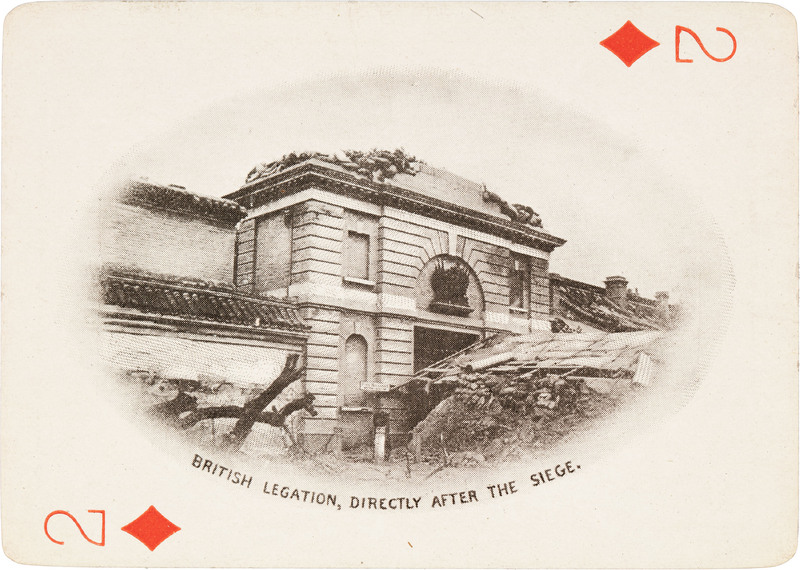
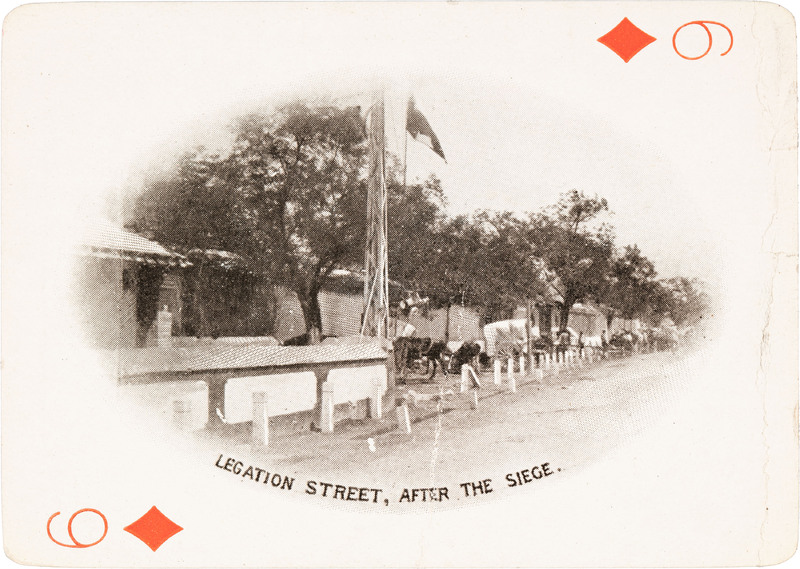
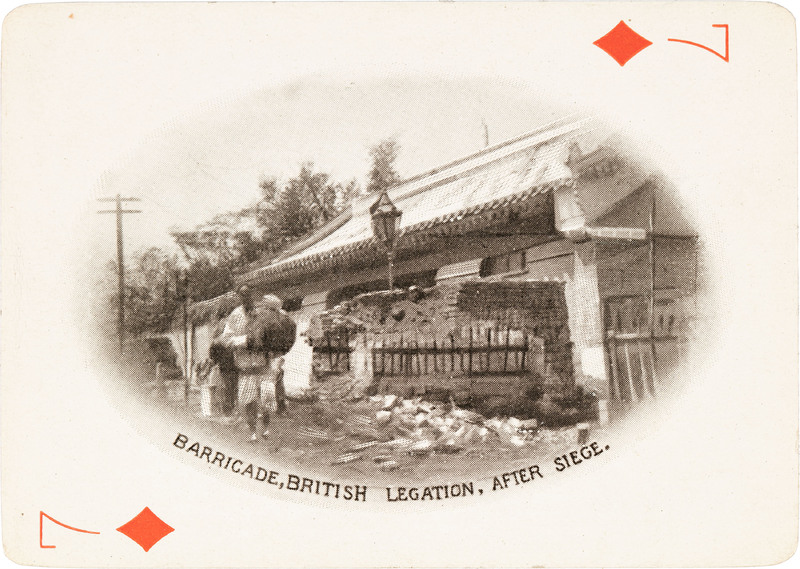
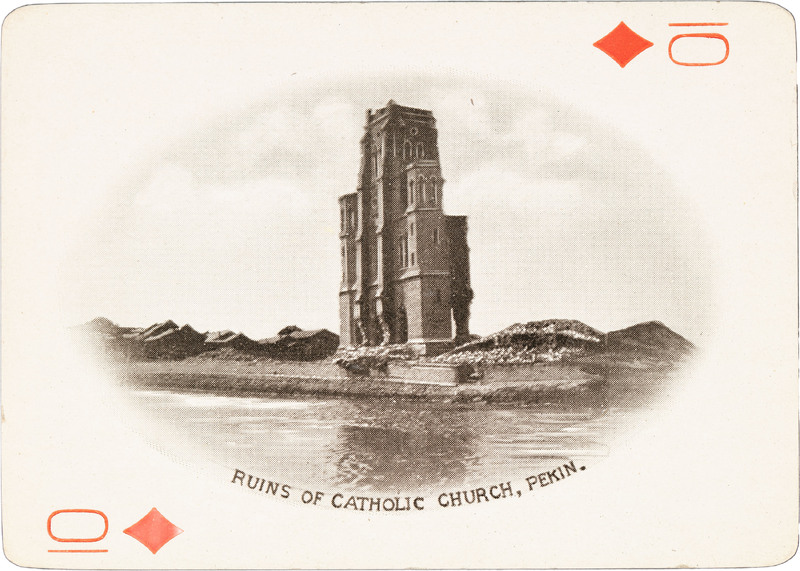
In June 1900, the Boxers initiated a siege of the foreign diplomatic quarters in Beijing, prompting Empress Dowager Cixi, the Qing dynasty’s de-facto leader, to support the Boxers and formally declare war against foreign nations. In reaction, eight foreign powers, including Britain, France, Germany, Russia, Japan, Italy, Austria-Hungary, and the United States, formed a military alliance known as the Eight-Nation Alliance. The siege endured until mid-August, culminating in the Alliance’s military occupation of Beijing, marked by severe violence, looting, and extensive destruction. Ultimately, the conflict concluded with the signing of the Boxer Protocol in 1901, imposing harsh financial penalties and political restrictions on China. This treaty not only undermined China’s sovereignty but also intensified a lasting sense of national humiliation.
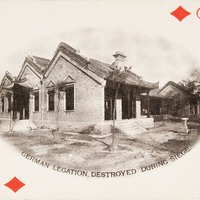
Presented below are several depictions from the deck illustrating the aftermath of the siege
Citation
1. Paul A. Cohen, History in Three Keys: The Boxers as Event, Experience, and Myth (Columbia University Press, 1997); Paul A. Cohen, “The Contested Past: The Boxers as History and Myth,” The Journal of Asian Studies 51, no. 1 (1992): 82–113; Paul A. Cohen, “The Boxer Uprising,” in China: Adapting the Past, Confronting the Future, edited by Thomas Buoye, Kirk Denton, Bruce Dickson, Barry Naughton, and Martin K. Whyte, (University of Michigan Press, 2002), 62–74.
Previous Section:
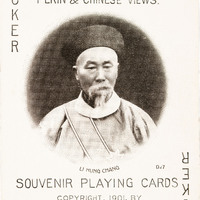
The Forbidden City, Pekin & Chinese Views Souvenir Playing Cards
Next Section: